

Dr. Antonios Meimaris Interview in Greek Newspaper “Amaryssia”: “Artificial Intelligence is a tool, not an authority.” Read here:
- georgeskiadas
- Oct 12, 2025
- 4 min read
The Greek scientist behind the innovative PaperLab application explains the idea that inspired its creation, aimed at facilitating scientific research, and shares his views on the pros and cons of Artificial Intelligence.
When you have the ability to accelerate your scientific research in a valid and concise way, compressing the time and content of tens of thousands of pages of publications, you make your work far easier and more practical, with even better results.
That is what PaperLab offers: a digital AI-powered tool created by Dr. Antonios Meimaris and his team, which has already received enthusiastic feedback from the international academic community.
AMARYSIA contacted Dr. Antonios Meimaris in “distant” Australia. He responded to our questions, describing PaperLab and sharing his perspective as a specialist on the benefits and risks of AI development and use in today’s world.
Interview by: Giannis Bethanis

Could you introduce yourself to us and our readers? Tell us about your scientific and academic background before PaperLab.
My journey began at the Department of Mathematics at the University of Athens. I then followed the path of research, first with my PhD work at the University of Liverpool in the UK, where I collaborated with Columbia University, and later completed my PhD at Monash University in Australia. I have collaborated with Australian government agencies and Silicon Valley companies, and have given talks as a visiting researcher at universities such as MIT and Caltech. I also serve on international scientific committees, had early access to models such as OpenAI’s DALL·E before its public release due to my research on diffusion models, and have been recognized by organizations such as the United Nations for my contributions to the Sustainable Development Goals, as well as by Forbes 30 Under 30.
What is PaperLab in simple terms, and what does its use mean for everyday research?
PaperLab allows researchers and R&D teams to “read” and analyze thousands of scientific (and non-scientific) papers simultaneously. Think of how long a literature review takes today, we reduce that time from weeks to minutes. In essence, it helps researchers quickly identify key findings, connect ideas, and advance their work more efficiently.
How did the idea come about? What experiences sparked its creation?
Mainly from realizing how painful and time-consuming it is to sift through thousands of papers to find relevant information. This problem grows every year—millions of new papers are published globally, roughly one every 10 seconds. It’s practically impossible for a human to keep up. So I realized we needed a new approach, using AI to filter, connect, and leverage this vast body of knowledge quickly and meaningfully.
What feedback do you receive from PaperLab users? Could you share some examples or stories?
Feedback has been overwhelmingly positive. At our first presentation in Melbourne, within about eight hours, we received nearly 200 early-access requests. Research teams in Australia are already piloting it.
Users describe it as “magic,” saying it reduces their workload from tens of thousands of papers to just a few thousand, handling 1,000–2,000 papers a day. They note that traditional search tools like Ctrl+F are essentially useless—everyone writes differently—and that the “information overload” problem is constant.
Comments from researchers at institutions such as the Burnet Institute, University of Strathclyde, Peter MacCallum Cancer Centre, University of Warwick, Norwegian University of Life Sciences, and University of Minnesota converge on two points: time savings and better use of scientific knowledge. As one researcher put it, “Time is money for the academic community.”
Tell us about your key collaborators in this project.
PaperLab is the result of a collective effort that began through collaborations with talented researchers worldwide, exploring their own needs. From the start, I wanted a team combining diverse skills, from research and AI to product and business development. I focus on the scientific and technical direction, while a pivotal role is held by our Head of Growth, George Skiadas, based in Athens, with Krish Jain in Melbourne completing the team.
What qualities do you look for in someone joining your team?
I look for people passionate about research and technology. Academic titles are less important than curiosity, creativity, and the willingness to contribute to something that can transform how science and AI-based information extraction from large datasets progress. At this early stage, it’s critical to build a culture that mirrors PaperLab itself, transparent, focused, and value-driven for users.
What is the role of AI in everyday research? How can a researcher discern and trust valid information?
AI is a tool, not an authority. It helps identify patterns and correlations we might otherwise miss. However, final judgment must remain with the researcher. Cross-checking sources, critical thinking, and scientific methodology ensure the validity of any information.
Do you share the concerns about potential risks in AI development? What are they, in your view?
Yes. Risks include misinformation, algorithmic bias, and unethical uses of technology. As I wrote in my article “A.I. or Artificial Banditry?”, without an ethical framework AI can evolve into something that pursues its goals at society’s expense. We already see examples, like facial recognition systems leading to discrimination. Responsible development, transparency, and oversight are essential to keep AI a tool for collective benefit.
Since every coin has two sides, what do you see as the advantages of AI in science and daily life?
The benefits are enormous. In science, AI accelerates discovery, reduces costs, and opens new paths to solving previously intractable problems. In daily life, it already supports healthcare, education, entertainment, and communication. AI can act as a “multiplier” of human capabilities.
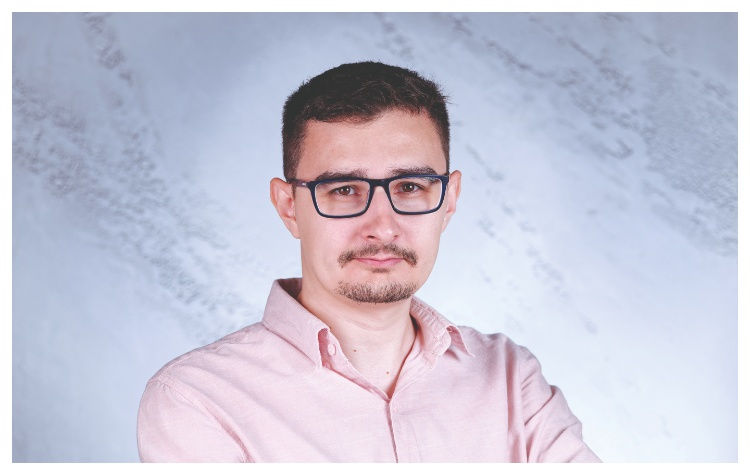
You live and work in Australia. Do you miss Greece and Athens? Would you like to return and work here someday?
I always miss Greece and Athens. My experience abroad was necessary to learn, create, and test myself. The R&D environment in Australia is entirely different—developing a truly innovative idea is easier, and the system offers strong support. I don’t plan to return immediately, but I want to contribute to Greece from where I am. That’s why our first partnership choice was from Greece, and several collaborations with researchers are starting there. The goal is for what we build to give back—to support both Greek and international research communities. We’re already planning European expansion, with one of the next steps being to establish a legal entity in Greece to connect more closely and support local teams.



Comments